



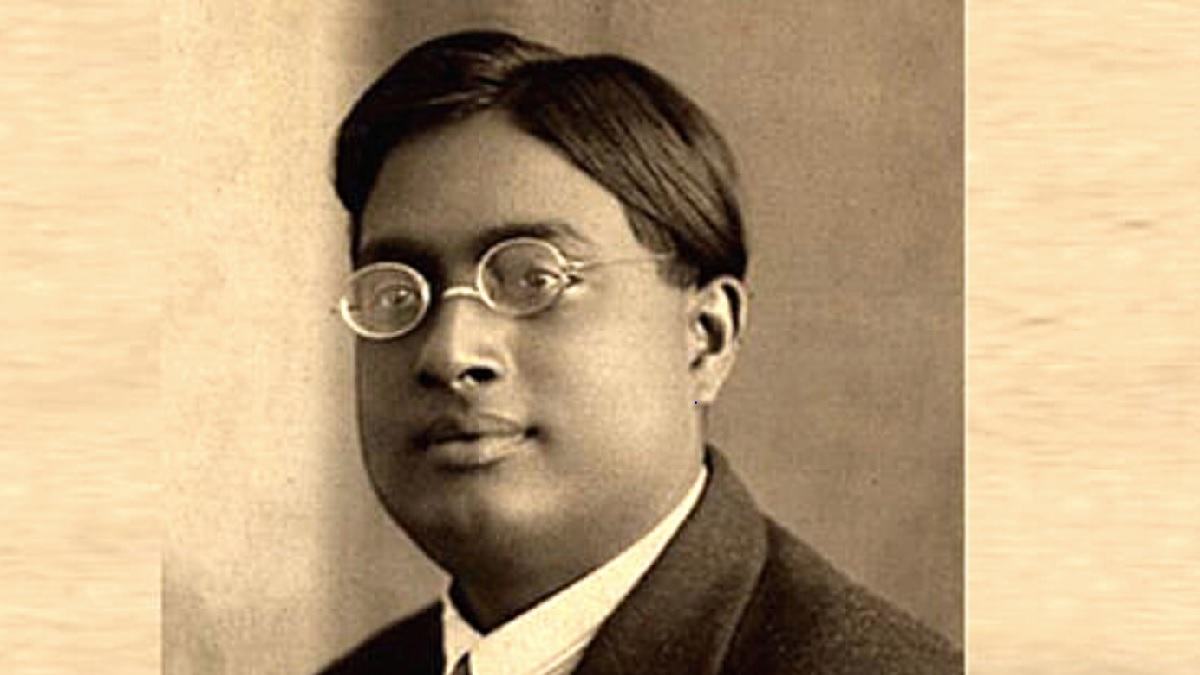
Satyendra Nath Bose, an Indian physicist whose groundbreaking work laid the foundation for one of the most important fields in modern physics, is celebrated worldwide for his contribution to quantum mechanics. Best known for his collaboration with Albert Einstein, Bose’s pioneering ideas led to the development of Bose-Einstein statistics, which fundamentally changed our understanding of particle physics.
Born on January 1, 1894, in Kolkata (then Calcutta), India, Bose excelled in mathematics and physics from a young age. His most significant contribution came in 1924 when he sent a paper to Einstein, proposing a new way to understand the behavior of particles that followed specific statistical laws. This work introduced the concept of bosons, a class of particles that includes force carriers like photons, responsible for electromagnetic forces.
Bose’s discovery led to the formulation of Bose-Einstein Condensate, a state of matter that occurs at extremely low temperatures, where particles coalesce into a single quantum entity. This theoretical work was later experimentally confirmed in 1995, earning a Nobel Prize for the physicists who proved it.
Though Bose did not receive a Nobel Prize himself, his work has had a profound and lasting impact on quantum theory. His legacy is honored through the naming of “bosons” after him and through the continued study of Bose-Einstein Condensates, which have applications in fields ranging from quantum computing to superfluidity.
Satyendra Nath Bose remains a towering figure in science, celebrated for his intellect, vision, and the global scientific contributions that bear his name. His work not only advanced the field of physics but also showcased India’s intellectual contributions to the world of science.