



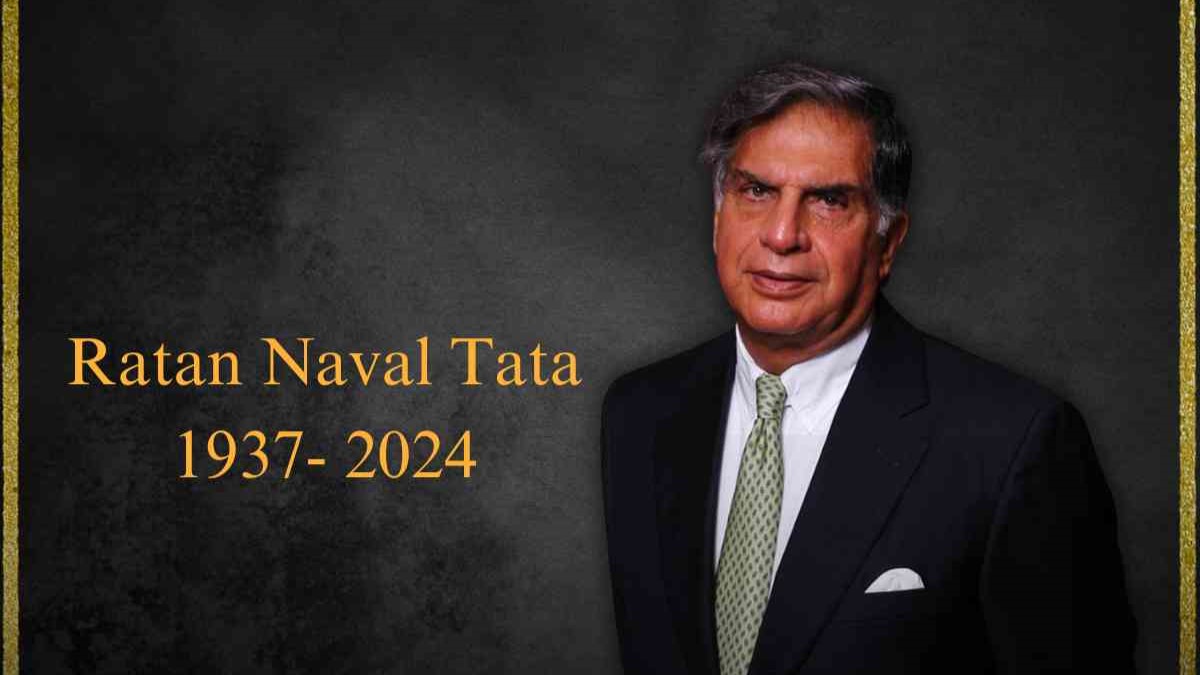
Ratan Naval Tata, born on December 28, 1937, in Bombay (now Mumbai), India, stands as one of the most iconic figures in Indian industry. As the former chairman of Tata Sons, he led the Tata Group to new heights, transforming it into a global conglomerate with interests spanning from steel and automobiles to software and telecommunications. Ratan Tata’s life story is a testament to leadership, vision, and philanthropy, earning him admiration both in India and internationally.
Early Life and Education:
Ratan Tata was born into one of India’s most prominent industrialist families. His father, Naval Tata, was adopted into the Tata family, which had already established a strong business legacy under Jamsetji Tata. Ratan was raised by his grandmother, Lady Navajbai Tata, following the separation of his parents. He attended the prestigious Campion School in Mumbai before moving to the United States to study architecture and structural engineering at Cornell University. He later completed the Advanced Management Program at Harvard Business School.
The Rise in Tata Group:
Ratan Tata joined the Tata Group in 1962, working in various companies under its vast umbrella. His initial days were spent learning the ropes at Tata Steel in Jamshedpur, where he worked alongside blue-collar workers, a move that showed his commitment to understanding the workforce from the ground up. In 1991, he succeeded J.R.D. Tata as the chairman of Tata Sons, and it was under his leadership that the group expanded internationally.
Major Achievements:
Ratan Tata’s leadership marked a period of significant growth for the Tata Group. He spearheaded major acquisitions like Tetley Tea in 2000, Corus Steel in 2007, and Jaguar Land Rover in 2008, which established Tata as a global brand. He also introduced the Tata Nano, the world’s most affordable car, aimed at revolutionizing personal transportation in India.
Under his vision, Tata Consultancy Services (TCS) became a global IT leader, and Tata Motors launched India’s first indigenously developed car, the Tata Indica. His emphasis on innovation, ethics, and global expansion helped the Tata Group’s revenues grow exponentially during his tenure.
Philanthropy and Social Impact:
Beyond business, Ratan Tata is revered for his philanthropy. A significant portion of Tata Sons’ earnings is channeled into various charitable trusts, focusing on education, healthcare, and rural development. He personally contributed to causes such as disaster relief, cancer research, and innovation in education. Under his guidance, Tata Trusts helped transform the lives of millions in India.
Awards and Recognition:
Ratan Tata has received numerous awards throughout his career. He was awarded the Padma Bhushan in 2000 and the Padma Vibhushan in 2008, two of India’s highest civilian honors. Internationally, he has been recognized for his leadership and philanthropy, receiving honorary doctorates and prestigious accolades.
Retirement and Legacy:
Ratan Tata stepped down as chairman of Tata Sons in 2012 but continues to remain an influential figure in business and philanthropy. He remains involved in mentoring young entrepreneurs and is a vocal advocate for innovation, technology, and responsible business practices.
Ratan Tata’s life story is not just one of corporate success but also of a deep commitment to uplifting society. His vision, integrity, and philanthropic efforts have left an indelible mark on India and the world, making him a true beacon of leadership in the modern era.