



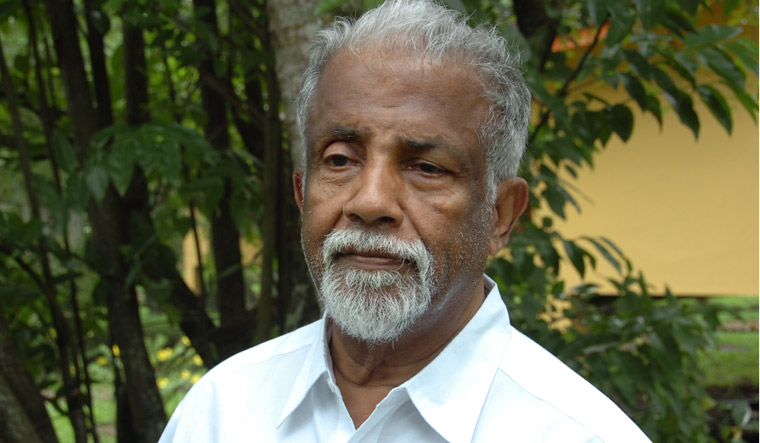
E. C. George Sudarshan, an Indian-American theoretical physicist, made groundbreaking contributions to the world of physics, leaving a lasting legacy. Born in Kerala, India, Sudarshan’s work spanned a wide array of fields, from quantum optics to quantum field theory. His most notable achievement was the discovery of the V-A theory of weak interactions, which played a critical role in explaining the behavior of subatomic particles.
Sudarshan is also known for his pioneering work on tachyons, hypothetical particles that travel faster than light, challenging long-standing concepts in relativity. His work on the quantum theory of open systems, known as the Sudarshan-Glauber representation, earned him global recognition and a lasting place in scientific history.
Despite being nominated for the Nobel Prize multiple times, Sudarshan never received the award, a point of contention within the scientific community. However, his profound impact on modern physics is undisputed, with his theories continuing to influence research in quantum mechanics and beyond.
Sudarshan was also a respected educator, serving as a professor at the University of Texas at Austin and inspiring countless students. His contributions to physics have cemented his status as one of the most influential scientific minds of the 20th century.