



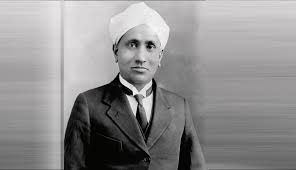
Sir Chandrasekhara Venkata Raman, commonly known as C.V. Raman, is one of India’s most celebrated scientists. His pioneering work in the field of light scattering earned him the prestigious Nobel Prize in Physics in 1930, marking a significant moment not only for Indian science but also for the global scientific community.
Early Life and Education
C.V. Raman was born on November 7, 1888, in the small town of Tiruchirappalli in Tamil Nadu, India. His father, a lecturer in mathematics and physics, inspired young Raman to pursue a passion for science. Raman’s academic brilliance was evident from a young age. He completed his secondary education at just 11 years old and graduated from Presidency College, Madras, at the age of 16 with the highest distinction in physics. Despite limited opportunities for scientific research in colonial India, Raman’s curiosity and determination pushed him toward groundbreaking discoveries.
Career and Major Contributions
Raman began his career as a government official in the Indian Finance Service, but his love for physics never faded. After working during the day, he would conduct experiments in his spare time. His passion led him to join the Indian Association for the Cultivation of Science (IACS) in Kolkata, where he began his serious research.
His most famous discovery, the Raman Effect, occurred in 1928. The Raman Effect involves the scattering of light and is based on the observation that when light passes through a transparent material, a small portion of the light changes in wavelength. This shift is a result of the interaction between the light and the molecular vibrations of the material. Raman’s discovery was revolutionary, as it provided a new way to study the composition and molecular structure of substances. The discovery laid the foundation for Raman spectroscopy, a technique that is still widely used in chemistry and physics today.
Nobel Prize and Global Recognition
In 1930, C.V. Raman became the first Asian to win a Nobel Prize in the sciences for his discovery of the Raman Effect. His recognition was a matter of immense pride for India, which was still under British rule at the time. The Nobel Committee recognized his work as a significant advancement in the understanding of light scattering, placing him among the most influential physicists of his era.
Beyond his Nobel Prize, Raman received numerous accolades and honors throughout his life. He was knighted by the British government in 1929, and in 1954, the Government of India awarded him the Bharat Ratna, India’s highest civilian honor.
Later Life and Legacy
In the later stages of his career, Raman continued to work on optics and acoustics, studying phenomena such as the structure of diamonds and the properties of crystals. He established the Raman Research Institute in Bangalore in 1948, where he continued his research until his death.
C.V. Raman passed away on November 21, 1970, leaving behind a legacy of scientific inquiry and discovery. His work laid the groundwork for modern molecular spectroscopy and continues to inspire scientists around the world. Raman’s contributions to physics are remembered annually in India on National Science Day, celebrated on February 28, the day he discovered the Raman Effect.
Conclusion
C.V. Raman’s life is a testament to perseverance, curiosity, and the pursuit of knowledge. Despite the challenges of conducting research in colonial India, his unwavering dedication to science led to one of the most significant discoveries of the 20th century. Through his work, Raman not only changed the way we understand the behavior of light but also paved the way for future generations of scientists in India and beyond.